
DLW Ecommerce Charge on Credit Card [Identified]

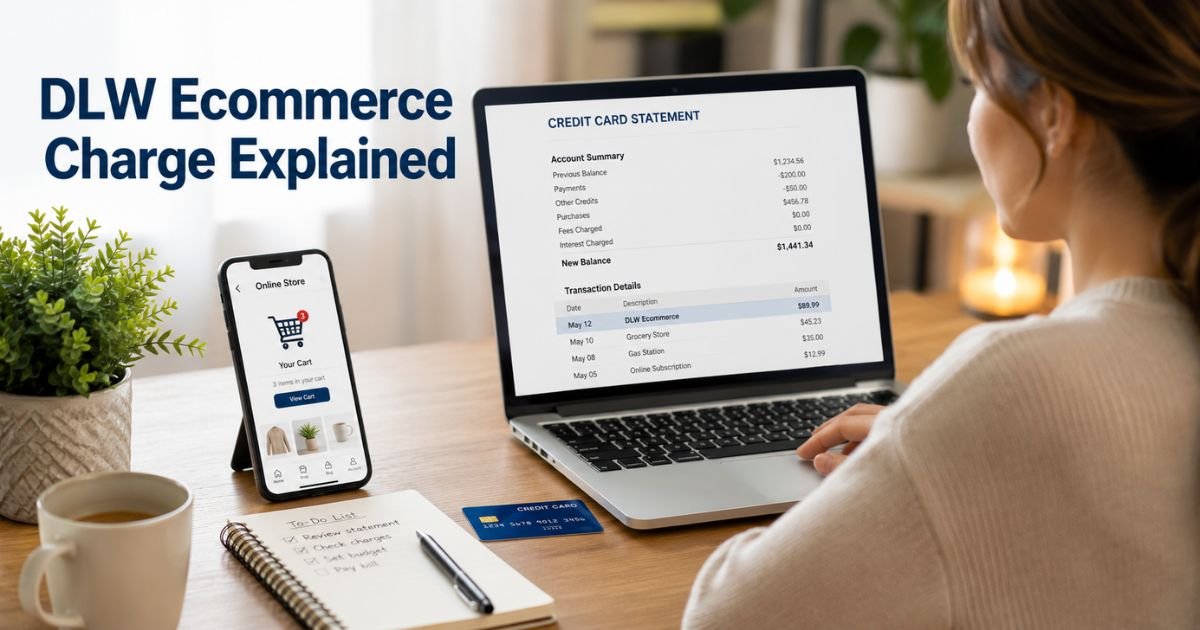
You check your credit card statement and notice a charge labeled “DLW Ecommerce,” “DLW ECOMMERCE,” or something similar. You do not remember shopping at a store by that name, so the charge feels suspicious.
This happens often with online purchases. Merchant names on statements can look different from the website or brand you actually bought from. The good news is that most of these charges turn out to be legitimate e-commerce transactions.
This article explains what a DLW Ecommerce charge on a credit card typically means, why it appears, how to confirm whether it belongs to you, and what to do if it does not.
Quick Answer
A DLW Ecommerce charge on credit card is usually a legitimate online purchase processed under that merchant name. It is linked to e-commerce activity, often through platforms or payment systems associated with DLW Ecommerce (including entities such as DLW Ecommerce SA de CV). Check recent online orders first.
If you still do not recognize it, contact your bank and the merchant for details.
What Is DLW Ecommerce?
Public information shows DLW Ecommerce connected to DLW Fortress operations, including a Mexican entity (DLW Ecommerce SA de CV in Durango). The group focuses on infrastructure and hosts e-commerce platforms that handle real payment processing.
In practice, the name “DLW Ecommerce” (or close variations) appears on statements when a customer makes a purchase on an online store that uses related payment processing or hosting. The statement shows the processor or entity name rather than the individual brand or storefront you remember.
This is common in e-commerce. Payment processors, merchant-of-record services, or hosting providers often list their own descriptors on bank and credit card statements.
Why Does the DLW Ecommerce Charge Appear?
The charge appears because that is the billing descriptor used for the transaction. Online purchases frequently show under a parent company, payment processor, or technical provider instead of the consumer-facing brand.
Typical reasons include:
- Buying products or services from a website that routes payments through DLW-related systems
- Completing checkout on a platform hosted or processed under that name
- Recurring or one-time digital or physical goods orders
Amounts can vary widely depending on what was purchased. Small digital items, subscriptions, or larger product orders are all possible.
How to Verify the Charge Is Yours
Use these practical steps:
- Match the date and exact amount to any recent online orders or email receipts.
- Search your email for order confirmations around the same date. Look for unfamiliar store names or payment processors.
- Check saved payment methods, browser history, or shopping apps for possible matches.
- Review the full merchant description on your statement. Extra numbers, location codes, or phone numbers sometimes appear and can help identify the source.
- Log into your credit card account online or in the app for more transaction details if available.
If the purchase was made through a third-party platform or marketplace, the statement may still show the payment processor name.
What to Do If You Do Not Recognize the Charge
Most people eventually connect the charge to a forgotten online order. If you are certain it is not yours:
- Contact your credit card issuer right away using the number on the back of your card. Ask for the full merchant details and any available transaction notes.
- Reach out to the merchant if a phone number or website appears with the charge.
- Dispute the charge with your card issuer if it remains unexplained. Credit cards generally offer strong consumer protections for unauthorized transactions under the Fair Credit Billing Act.
- Monitor your account for similar future charges and consider placing a temporary freeze or alert on the card.
Act quickly. Most issuers have time limits for disputing billing errors.
Common Reasons for Confusion with Ecommerce Charges
Online merchant names often look different from the brand you know for several reasons:
| Reason | Explanation |
|---|---|
| Payment processor name | The company handling the card transaction appears instead of the store |
| Parent or holding company | A larger entity or technical provider is listed |
| Character limits | Statements truncate long names, creating odd abbreviations |
| International or multi-entity setup | Different legal entities in various countries can show on statements |
| Third-party checkout | Services that process payments on behalf of smaller stores |
These factors make unfamiliar names common even for legitimate purchases.
Tips to Reduce Future Confusion
- Save order confirmation emails and receipts in a dedicated folder.
- Turn on real-time transaction alerts in your credit card app.
- Use virtual card numbers or one-time payment methods for new or unfamiliar websites when available.
- Review statements weekly instead of waiting for the monthly bill.
- Keep a simple note of larger online purchases with dates and amounts.
These habits make it much easier to match charges later.
FAQs About DLW Ecommerce Charge on Credit Card
Q: Is a DLW Ecommerce charge a scam?
Not usually. It is typically a real e-commerce transaction processed under that merchant descriptor. Treat it as potential fraud only after you have checked recent purchases and contacted your bank for more details.
Q: Why doesn’t the charge show the store name I remember?
Payment processors, hosting providers, and merchant-of-record services often appear on statements instead of the consumer-facing brand. This is standard in online retail.
Q: Can I get a refund for a DLW Ecommerce charge?
If the charge is legitimate, request a refund directly from the seller using the order confirmation or customer service contact. For unauthorized charges, dispute them through your credit card issuer.
Q: How long do I have to dispute an unrecognized charge?
Under U.S. credit card rules, you generally have 60 days from the statement date that first shows the error to dispute it in writing. Contact your issuer as soon as possible for the exact process and deadlines.
Conclusion
A DLW Ecommerce charge on credit card is most often a legitimate online purchase processed under that merchant name. It connects to e-commerce activity, frequently through platforms or payment systems linked to DLW Ecommerce entities.
Start by matching the date and amount to recent orders. If nothing fits, contact your bank for full details and dispute the charge if needed. Staying proactive with alerts and regular statement reviews helps you catch and resolve unfamiliar charges quickly.
Disclaimer: This article offers general information based on publicly available details about DLW Ecommerce and common credit card statement practices. It is not financial, legal, or consumer protection advice. Merchant descriptors can vary, and only your card issuer can confirm the exact source of a specific charge. Always verify details directly with your bank or credit card company.


