
Public Records US Cancel Subscription Guide [Step by Step]

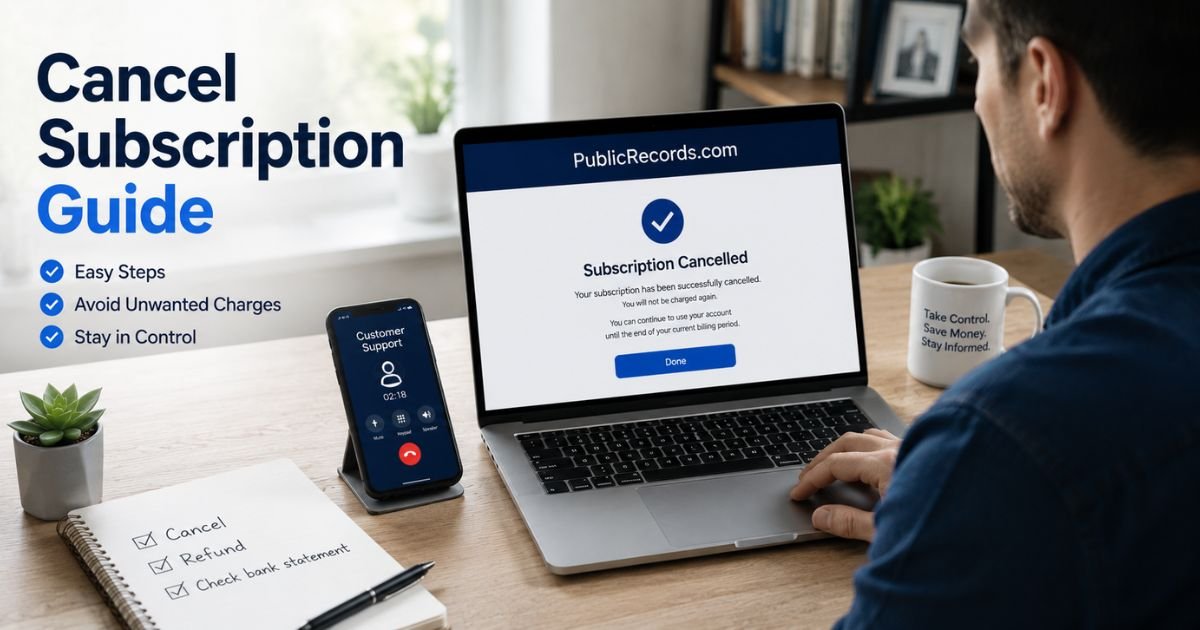
Ever checked your bank statement and noticed a recurring charge from a public records website you barely remember signing up for? It happens more often than you might think, especially when a low-cost trial turns into a monthly membership.
If you’re searching for public records us cancel subscription, you’re probably trying to stop future billing, confirm your account is closed, or figure out whether you can get a refund.
This guide walks you through the cancellation process in plain English. You’ll learn how to cancel online, how to contact customer support, what details to save, and what to do if charges continue after cancellation.
What Is Public Records US?
Public Records US is commonly searched as a public records lookup service, usually associated with finding background-style information from public databases.
Services like this may offer access to reports, people searches, address history, phone number lookups, criminal records summaries, or similar public information tools.
Many public records websites use a subscription model. That means you may pay a recurring monthly fee after signing up for a trial, one-time report, or membership plan.
Before canceling, it helps to understand what you may have signed up for. Look for clues such as:
- A welcome email or receipt
- A trial confirmation message
- A monthly membership charge
- A billing descriptor on your card statement
- Login details for your account
- Terms that mention recurring billing
If you don’t remember creating an account, don’t ignore the charge. Some users sign up while searching for a single report, then forget the service renews automatically.
Public Records US Cancel Subscription: Step-by-Step
If you want the fastest path to cancel, start with your account dashboard. Most subscription services provide a cancellation option inside account settings, billing settings, or membership settings.
Step 1: Log In to Your Account
Go to the website where you created your account and sign in using the email address you used during registration. If you don’t remember your password, use the “Forgot Password” option.
Once you’re logged in, check these areas:
- Account Settings
- Billing
- Subscription
- Membership
- Payment Settings
- Manage Plan
Look for wording like “Cancel Subscription,” “Turn Off Auto-Renewal,” “Cancel Membership,” or “Close Account.”
Step 2: Follow the Cancellation Prompts
After selecting the cancellation option, the website may ask why you’re leaving. It may also show a discount, pause option, or warning that you’ll lose access to reports.
Read each screen carefully. Continue until you see a clear confirmation message.
You should look for phrases such as:
- “Your subscription has been canceled”
- “Auto-renewal has been turned off”
- “You will not be billed again”
- “Your membership ends on [date]”
If the page only says your request was received, treat it as pending until you receive written confirmation.
Step 3: Save Proof of Cancellation
This step matters. Take a screenshot of the confirmation page and save any cancellation email you receive.
Keep a simple record with:
- Date and time of cancellation
- Email address used for the account
- Confirmation number, if provided
- Name of the support agent, if applicable
- Screenshot of the cancellation page
- Copy of any support chat or email
Pro Tip: Create a folder in your email called “Canceled Subscriptions.” Save every cancellation confirmation there so you can find proof quickly if a charge appears later.
How to Cancel If You Can’t Log In
Sometimes the biggest problem isn’t the cancellation button. It’s getting into the account in the first place. Maybe you used an old email, forgot the password, or never received login details.
If that happens, try these steps.
Search Your Email First
Open your inbox and search for terms like:
- “Public Records US”
- “public records”
- “subscription”
- “membership”
- “receipt”
- “trial”
- “billing”
- “cancel”
Also check your spam, promotions, and updates folders. Subscription receipts often land outside the main inbox.
Use the Card Charge as a Clue
Your bank or credit card statement may show a billing descriptor. It might not match the website name exactly. Write down the full descriptor, charge amount, and date.
Then use that information when contacting support. A clear billing record helps the company locate your account faster.
Contact Customer Support
If you can’t access your account, contact customer service and ask them to cancel manually. Include enough information to verify the account, but don’t send sensitive details like your full card number.
You can usually provide:
- Your full name
- Email addresses you may have used
- Last four digits of the card
- Charge amount
- Charge date
- Billing descriptor
- Your cancellation request in writing
Ask for written confirmation once the subscription is canceled.
What Should You Say When Requesting Cancellation?
A short, direct message usually works best. You don’t need a long explanation.
Here’s a simple template you can adapt:
“Hello, I want to cancel my Public Records US subscription immediately and stop all future billing. Please confirm that my membership has been canceled and that I will not be charged again. My account email may be [your email]. The most recent charge was [amount] on [date]. Please send written confirmation.”
If you’re requesting a refund, add:
“I’m also requesting a refund for the most recent charge because I did not intend to continue the subscription.”
Keep your tone polite and firm. Support teams can usually process requests faster when your message is clear.
Can You Get a Refund After Canceling?
Refund policies vary by company, plan type, and timing. Some services may deny refunds once a report has been accessed. Others may offer a partial or full refund if you cancel soon after renewal.
The best approach is to ask quickly and include a specific reason.
You may have a stronger refund request if:
- You canceled shortly after the renewal
- You didn’t use the service after being charged
- You were charged after canceling
- You didn’t receive clear renewal notice
- You were unable to access your account
- You were billed more than expected
Don’t wait weeks to ask. The sooner you contact support, the better your chances.
| Situation | Best Action | What to Save |
|---|---|---|
| You can log in | Cancel through account settings | Screenshot and confirmation email |
| You can’t log in | Contact customer support | Support ticket number and emails |
| You were just charged | Cancel and request refund | Charge date, amount, and billing descriptor |
| Charges continue after cancellation | Contact support again, then your bank if needed | Cancellation proof and bank statement |
| You don’t recognize the account | Ask support to locate it by billing details | Last four card digits and charge info |
Common Reasons People Struggle to Cancel
Subscription cancellations can feel frustrating because the path isn’t always obvious. Many users run into the same issues.
Here are the most common problems:
- The cancellation button is buried in account settings
- The website asks you to call or email support
- The billing name doesn’t match the website name
- The user signed up with a different email address
- The trial converted into a paid plan
- The cancellation didn’t fully process
- The user closed the browser before reaching the final confirmation page
Common Mistake: Don’t assume deleting your account, deleting the app, or unsubscribing from marketing emails cancels billing. You usually need to cancel the paid subscription or turn off auto-renewal separately.
Once you know these traps, you can avoid wasting time and focus on getting written proof.
What to Do If Public Records US Keeps Charging You
If you completed the public records us cancel subscription process but still see charges, don’t ignore them. Start by checking whether the new charge posted before or after cancellation.
Follow This Escalation Path
- Review your cancellation proof: Check the date, time, and confirmation details.
- Contact customer support again: Send your proof and ask them to reverse the charge.
- Ask for a written explanation: Request clarification on why billing continued.
- Contact your bank or card issuer: If support doesn’t help, ask your bank about dispute options.
- Monitor your next statement: Make sure no additional charges appear.
When contacting your bank, be ready to explain that you canceled and were billed again. Your screenshot or email confirmation can support your dispute.
How to Avoid Future Public Records Subscription Charges
Once you cancel, it’s worth tightening up your subscription habits. A few small steps can prevent future headaches.
Try these practical tips:
- Use a dedicated email folder for receipts and subscriptions
- Set a calendar reminder before any trial ends
- Read the renewal terms before entering payment details
- Use virtual cards when available through your bank
- Review your bank statement at least once a month
- Cancel trials immediately if you only need one report
- Save every cancellation confirmation
If you often test online services, a simple spreadsheet can help. Track the service name, signup date, trial end date, monthly price, and cancellation status.
Is Canceling the Same as Deleting Your Information?
Not always. Canceling your subscription usually stops future billing. It may not automatically delete your account, remove saved reports, or erase your personal information from the service.
If you want more than cancellation, ask support about:
- Closing your account
- Deleting stored payment details
- Removing saved searches
- Deleting your profile information
- Opting out of marketing emails
- Data privacy request options
Some public records websites also have separate opt-out processes. These may be different from canceling a paid membership. If privacy is your main concern, read the site’s privacy policy and look for “opt out,” “data removal,” or “privacy request” instructions.
How Long Does Cancellation Take?
Online cancellations may take effect immediately, but access may continue until the end of the paid billing period. Support-based cancellations can take longer, especially if they need to verify your account.
In general:
- Online cancellation may be instant
- Email support may take 1 to 3 business days
- Refund reviews may take several business days
- Bank disputes may take longer, depending on your card issuer
If your renewal date is close, cancel as soon as possible. Waiting until the final day can increase the risk of another charge.
FAQs About Public Records US Cancel Subscription
Q: How do I cancel Public Records US if I forgot which email I used?
Search all your email accounts for receipts, trial confirmations, or billing messages related to public records, reports, subscriptions, or memberships. If you still can’t find it, contact support with the charge date, amount, billing descriptor, and last four digits of your card so they can locate the account.
Q: Can I dispute a Public Records US charge after canceling?
Yes, you can contact your bank or credit card issuer if you were charged after cancellation or don’t recognize the transaction. Before disputing, gather proof such as screenshots, confirmation emails, support messages, and bank statements. Your card issuer may ask for these details during the dispute review.
Q: Does canceling Public Records US remove my personal information from the website?
Usually, canceling only stops the paid subscription and future billing. It may not remove your account data, saved searches, or personal information from public records listings. If you want data removed, look for a separate privacy, opt-out, or data deletion request process.
Conclusion
Canceling a public records subscription is much easier when you know where to look and what proof to save. Start by logging into your account, checking billing or membership settings, and completing every cancellation prompt until you receive confirmation. If you can’t access your account, contact support with your billing details and ask for written confirmation.
The most important part of the public records us cancel subscription process is documentation. Save screenshots, emails, ticket numbers, and bank statement details. If another charge appears, you’ll have what you need to follow up or contact your card issuer.
Take a few minutes today to cancel, confirm, and check your next statement. That small effort can help you avoid another unwanted renewal.
Disclaimer: This content is for informational and educational purposes only and does not constitute professional, financial, legal, or medical advice. The information provided may not apply to your specific situation. Always consult a qualified professional for personalized guidance.