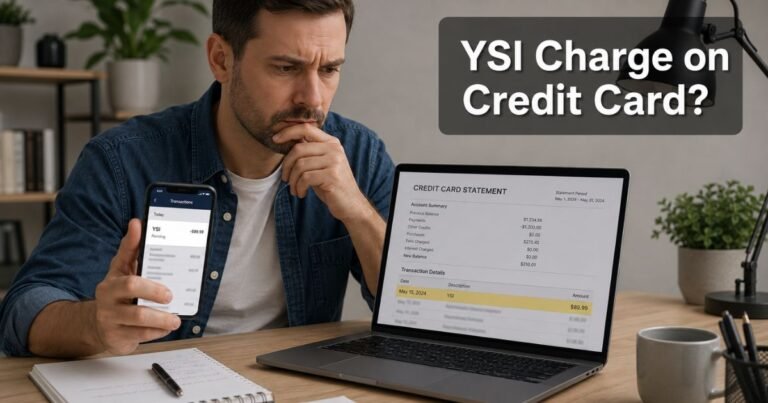
TFL Travel Charge on Credit Card [Identified]


You scan your statement and see TFL Travel. You may not remember buying a ticket. That can feel confusing, but the line usually has a simple source.
A TFL Travel charge on credit card typically comes from Transport for London. That is the public body that runs the Tube, buses, and much of London’s transit. The charge is generally a day’s pay-as-you-go fares, not a monthly membership.
What Is a TFL Travel Charge on Credit Card?
TFL stands for Transport for London. Banks often print TFL Travel Charge or TFL.gov.uk/CP when you tap a contactless card or phone at a reader.
You tap in at the start of a trip and tap out at the end on trains. On buses and trams you typically tap only when you board. TfL then adds up that day’s trips and bills one fare.
The amount on your U.S. card is usually in dollars after a pound-sterling conversion. Your issuer may also add a foreign-transaction fee. That extra fee is from your bank, not a second Tube ticket.
This is not usually a subscription. It posts when you travel. Oyster auto top-up is the main exception if you linked a card to refill an Oyster balance.
How the Charge May Appear
Issuers shorten the name in different ways. You may see one of these lines, or a close mix.
| Statement text you may see | What it typically points to |
|---|---|
| TFL TRAVEL CHARGE or TFL TRAVEL CH | Daily contactless fare total |
| TFL.GOV.UK/CP | Contactless pay-as-you-go billing |
| TFL TRAVEL REFUND | A fare correction or refund |
| OYSTER AUTOTOPUP | Automatic Oyster balance refill |
| TFL CYCLE HIRE | Santander Cycles bike hire |
Look at the date and amount. One line can cover several Tube and bus trips from the same day.
Why You Might See This Charge
You may have tapped your U.S. card or phone at a yellow reader in London. Apple Pay and Google Pay generally work the same way as a physical card.
TfL typically calculates the day’s fare after travel ends. Official replies have said contactless billing often runs around 4:00 a.m. the next morning. Your U.S. issuer may then take one to three days to post it.
You may see a higher amount than one ride because of daily or weekly capping. Incomplete trips can also trigger a maximum fare if you missed a tap out.
A second card in the same wallet can tap by accident. A travel companion who borrowed your phone can tap too. Oyster auto top-up can bill even when you are back home.
How Daily Fares Get Combined
TfL does not usually post each tap as its own credit-card sale. It groups journeys for that travel day, then sends one charge.
| What happened that day | What you may see later |
|---|---|
| Several taps on the same card | One combined daily fare |
| Missed tap in or tap out | A higher maximum fare |
| Fare later corrected | A TFL Travel Refund line |
| Small pending amount first | An authorization that later settles |
Fares and caps change, so do not guess from last year’s trip. Register the card on tfl.gov.uk to see the official journey list.
Use the same card or device to tap in and tap out. Mixing a phone and a watch on one trip can split the journey and raise the fare.
How to Confirm the Charge
Think back to any London visit around that date. Match the dollar amount to a day’s travel after currency conversion.
Create or sign in to a TfL account at tfl.gov.uk. Register the card or device you used. Open journey history and compare each day’s total to your statement.
Check whether Apple Pay or Google Wallet used a different underlying card than you expected. Also ask anyone who shared your phone or wallet during the trip.
If the line says Oyster auto top-up, look for an Oyster account tied to that card. That refill can continue after you leave London until you turn it off.
How to Fix or Stop Unwanted Billing
For a wrong fare, start with TfL, not only your U.S. bank. Register the card and use the refund or incomplete-journey tools on tfl.gov.uk. You can also call TfL on 0343 222 1234. That is a U.K. number, so international rates may apply.
If you set Oyster auto top-up, turn it off in your TfL account. Remove the saved card if you will not travel again soon.
Contactless travel itself has nothing to “cancel” like a magazine club. You stop new charges by not tapping that card on TfL readers.
If TfL cannot match the payment, call the number on the back of your card. Ask about a dispute and your issuer’s deadline. Time limits typically start from the statement date.
What to Do If You Do Not Recognize the Charge
Stay calm and write down the date, amount, and exact statement text. Then match those details to a trip or an Oyster account.
A charge that lands days after you flew home is still common. Processing lag does not by itself mean fraud.
If you never visited London and nobody else used the card, treat it as possible misuse. Freeze the card if your issuer offers that tool, then report the line.
A public-transit name is not proof of fraud. It is also not proof the fare is correct. Journey history on tfl.gov.uk is the clearest check.
Official Pages You Can Use
Use Transport for London’s own site for journey history and refunds.
| Resource | What it is for |
|---|---|
| tfl.gov.uk | Register a card and view journeys |
| tfl.gov.uk/fares | Touch-in and touch-out rules |
| 0343 222 1234 | Published TfL contactless help line |
| Your card issuer’s app | Dollar amount, FX fee, and disputes |
You do not need a third-party cancel service. Contactless TfL fares are travel charges, not a hidden club.
FAQs About TFL Travel Charge on Credit Card
Q: Is a TFL Travel charge a scam?
Not automatically. It most often is a real Transport for London fare. Still, any charge you cannot match to a trip or Oyster account deserves a closer look with TfL and your bank.
Q: Why did the charge post after I left London?
TfL typically totals the day after you travel. U.S. issuers may take another day or two to convert pounds and post the sale. A late line can still belong to an earlier tap.
Q: Why is the amount higher than one Tube ride?
One statement line can cover every tap that day, up to the cap that applied. A missed tap out can add a maximum fare. Your bank may also add a foreign-transaction fee.
Q: How do I stop future TFL Travel charges?
Do not tap that card or wallet on TfL readers. Turn off Oyster auto top-up if it is on. You cannot “unsubscribe” from contactless fares the way you cancel a streaming plan.
Conclusion
A TFL Travel charge on credit card usually points to Transport for London pay-as-you-go travel. Register the card at tfl.gov.uk, match the day’s journeys, and ask TfL first if the fare looks wrong.
If the line still does not make sense, your card issuer can help you review or dispute it. You have a path forward, and you do not have to guess alone.
Disclaimer: This article is for general information only. It is not financial, legal, or tax advice. Fares, caps, refund rules, and dispute timelines typically vary by date, zone, and card issuer. Verify current steps on tfl.gov.uk. For account-specific questions, contact Transport for London or your bank.